Tuesday, May 21

How to Organise a Book Festival


Every writer will tell you how there aren’t enough hours in the day, how hard it is to fit in actual writing with editing, proofreading, promotion, publicity. Not to mention maintaining a website, a Facebook page, Pinterest boards, a Twitter feed, a blog. Oh, and there’s the day job. Like the rest of us, author Ebba Brooks faces all those time challenges. But unlike the rest of us, Ebba also has a very large item on her to-do list: ‘Organise & run Prestwich Book Festival.’ 
Ta-dah! Looks easy, doesn't it?

Yes, you read that right: a book festival. This year, Prestwich Book Festival runs from 14 May to the 15 June, with 20 writers fronting 14 events. Happily, I’m one of those authors presenting one of those events. (You can find details here or at the end of this post). I’m attending others as an avid reader and book fan: I love to hear writers discuss their work. Yet as someone who goes to lots of writing-related festivals and conferences, I haven’t the first idea of how to go about organising one. I thought this would be the ideal opportunity to pick Ebba’s brains and see just how it’s done. She’s very kindly taken time out from PBF 2013 to share her wisdom.

Hi Ebba and thanks for stopping by. PBF 2013 kicked off on 14 May and is now in full swing, with some sold-out events. When did you start planning for your May 2013 deadline?

Back in June last year, as soon as the 2012 festival ended, I got a steering group together and we kicked some ideas around which have formed the basis of this year’s programme. But there have been a few twists and turns along the way as funding to support any kind of arts activity isn’t easy to come by. I eventually secured Arts Council Grants for the Arts funding in March this year (for which I am hugely grateful) and that’s when putting the plans into action kicked into gear.

As well as a terrific line-up, you’ve got some noteworthy Patrons for the festival: Howard Jacobson, Sherry Ashworth, and performance poet John Cooper Clarke. How did you persuade them to lend their support? What’s the role of a Patron in a festival?
Howard Jacobson- Winner of the 2010 Man Booker Prize & Patron of PBF
A patron is a figurehead for a festival, who gives a certain amount of credibility to it by lending their official support. It’s fantastic to have the seal of approval from the likes of Howard Jacobson, and John Cooper Clarke as well as the tireless Sherry Ashworth who is also on the steering group and has been very actively involved in making the festival happen. None of them took much persuading: the festival sold itself.

Prestwich Book Festival has a great new look this year, made possible by your artist-in-residence is Dave Kirkwood. Dave has also been responsible for an incredible project, 3hundredand65. Can you tell us a bit more about 3hundredand65?
Dave Kirkwood's PBF illustration for Paul Cookson, poet-in-residence at the National Football Museum

Dave is  a very talented artist, marketer and designer: last year he jointly ran the http://www.3hundredand65.co.uk/ project which aimed to create a book in 365 tweets, each one by a different author, but all illustrated by Dave, in aid of the Teenage Cancer Trust, from his home in Prestwich. It started small but by the end of the year had attracted some major celebrities to take part: Terry Pratchett, Simon Pegg, Jonathan Ross, Danny Baker, Jennifer Saunders, Minnie Driver, Stephen Fry and many, many more contributed. This year it’s being turned into a graphic novel.

Your strapline for 2013 is: ‘This year, we celebrate food, faith and football.’ What inspired it?

The interests and passions of local people. Pretty much everyone round here has an interest in at least one of these three themes!

Your line-up includes a Booker shortlisted author, a Glastonbury poet, an award winning Guardian journalist and an award winning food critic. How did you approach people in the first instance?
Award-winning Guardian journalist David Conn's latest book.
I asked them very politely, using people with personal connections where they existed.

The thorny question about funding! The website credits Arts Council England, which is really good to see. But applying for grants and funding often turns people off trying to do what you’ve done. What was that process like?

Hard work, and probably the least enjoyable aspect of the whole process. But once you start researching, you realise there are actually quite a lot of funding sources out there, it’s just a matter of tapping into them (which takes a lot of time and effort).

You’ve got a number of excellent venues: Manchester Jewish Museum, The Irish World Heritage Centre, Prestwich library, St Hilda’s church (among others!). All are very different and will have their own atmosphere and potential. How do you decide about venues? Is it a deal breaker if you can’t get a particular venue?
Manchester Jewish Museum
I love venues that add something extra to an event, and when you get the right balance of venue and artist it’s amazing. We’ve got lots of interesting venues right here on our doorstep (the newly refurbished British Legion, for example) and it’s great to encourage people to discover what’s under their noses.

What are your three favourite things about organising a book festival?

1) Bagging a big name. Shallow, yes, but very exciting
2) Knowing, just knowing, that an event is going to be extraordinary
3) Making a contribution to the community: enjoying so many great events on my own doorstep, and knowing that many other people have too

What are your three biggest headaches from organising a book festival?

1) Money: I’m not a natural accountant, but am having to force myself to keep spreadsheets to account for every penny. Yuck.
2) General paranoia: what if no one shows up?
3) Trying to fit it in with family life, my writing and my two other jobs...

If anybody reading this is thinking they’d like to have a go at organising author events or are ambitious enough to go for a whole festival or conference, what’s the one piece of advice you’d like to share?

You need to combine seeing the big picture (ie a vision of what you want to do) with being very detail oriented – because getting the details right is what event organising is all about.
PBF Food Birds!
And your own writing? What’s in the pipeline that you’d like to share?

My ambition for this year is to start submitting short pieces to journals and competitions as my writing has been fallow for much too long. And now I’ve said it in print, I’ve got to do it...

Ebba, many thanks and best of luck for the rest of the festival.
Thank you!

When she's not organising PBF, Ebba Brooks blogs as Jenny Wren & Bella Wilfer. You can find her here.
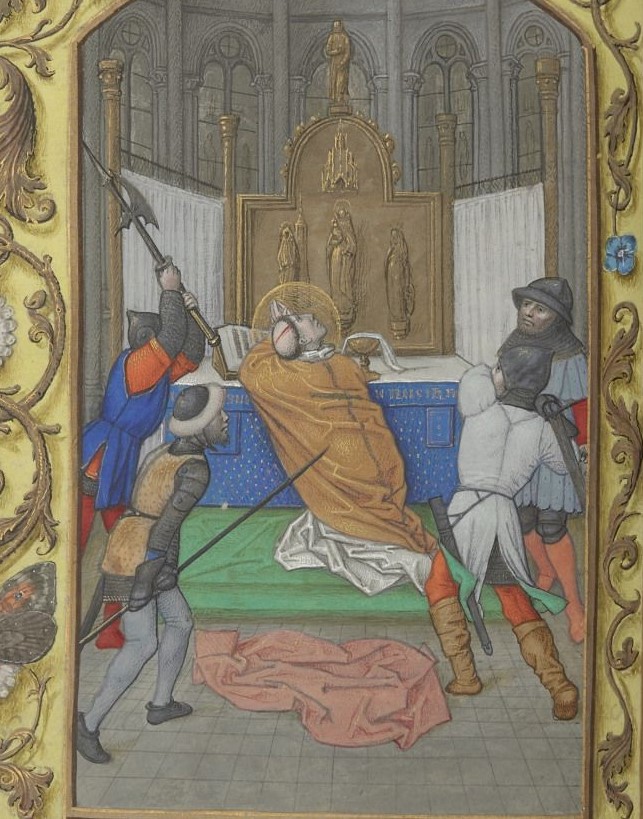
I too will be appearing at PBF at St Hilda's Church on Tuesday 28 May 2013 to talk about my #1 Amazon Bestseller, The Fifth Knight. I'll be sharing the evening with fellow Historical Fiction author, Deborah Swift. Our evening is titled Knights, nuns and sisters on the run and is a tribute to the late historical fiction author, Beverley Hughesdon.


Wednesday, May 15

Book Review: Unholy Night by Seth Grahame-Smith


Many historical fiction authors take on the Big Stories. I took on the murder of Archbishop Thomas Becket in Canterbury Cathedral in 1170 for my thriller, The Fifth Knight. But when I got offered (in my capacity as a reviewer for the Historical Novel Society) a copy of Seth Grahame-Smith's Unholy Night, I jumped at the chance.
For Grahame-Smith has taken on one of the biggest story of all: the birth of Christ. It’s the birth story from the perspective of one of the Three Wise Men (yes, they of gold, frankincense and myrrh fame), Balthazar. 

But Balthazar isn’t a king or a wise man. He’s a hustler and a thief on the run from the might of the Roman Empire and becomes an accidental hero in his defence of the holy family. The story of that defence is the substance of the novel. It’s a breath-taking ride, with a mash-up of historical fact, fiction and fantasy that is Grahame-Smith’s trademark and deeply moving at times. 
The real star for me was the evil King Herod. Here the author really lets rip with brilliant results. Like your villains badder than Bad Jack McBad? Then look no further, because Herod ticks every bad box and throws in a few more for good measure. 

As regards the holy family themselves, Grahame-Smith portrays Mary and Joseph as real human beings caught up in overwhelming circumstances. That's no mean feat. So many biblical based novels and movies descend into cardboard cut-outs of Mary (particularly) and Joseph because of the weight of religion and history they carry.
As to be expected, there are some zombies, but maybe not enough to satisfy die-hard Grahame-Smith fans. 
So did he succeed with the Big Story? For this reviewer, definitely. It was a hugely enjoyable, thrilling read.

Reviewer's Note: I was provided with a free copy of this novel by the Historical Novel Society in exchange for an impartial review. An edited version of this review has been published by the Historical Novel Society in May 2013.


UNHOLY NIGHT
Seth Grahame-Smith, Bantam Press, 2012, £12.99, hb, 410pp, 9780593071106


Publisher's Blurb:

From the author of the New York Times bestselling Abraham Lincoln: Vampire Huntercomes UNHOLY NIGHT, the next evolution in dark historical revisionism. 

They're an iconic part of history's most celebrated birth. But what do we really know about the Three Kings of the Nativity, besides the fact that they followed a star to Bethlehem bearing strange gifts? The Bible has little to say about this enigmatic trio. But leave it to Seth Grahame-Smith, the brilliant and twisted mind behind Abraham Lincoln: Vampire Hunter and Pride and Prejudice and Zombies to take a little mystery, bend a little history, and weave an epic tale. 

In Grahame-Smith's telling, the so-called "Three Wise Men" are infamous thieves, led by the dark, murderous Balthazar. After a daring escape from Herod's prison, they stumble upon the famous manger and its newborn king. The last thing Balthazar needs is to be slowed down by young Joseph, Mary and their infant. But when Herod's men begin to slaughter the first born in Judea, he has no choice but to help them escape to Egypt. 

It's the beginning of an adventure that will see them fight the last magical creatures of the Old Testament; cross paths with biblical figures like Pontius Pilate and John the Baptist; and finally deliver them to Egypt. It may just be the greatest story never told.

Tuesday, April 16

Travelling The World in My Pyjamas

I started an international tour today to promote my medieval thriller, The Fifth Knight. I'll be stopping off in different locations in the US, the UK, Canada and Australia. But it's a Virtual Book Tour hosted by the great Historical Fiction Virtual Book Tours. There are huge advantages to the tour being virtual.  I won't be leaving a massive carbon footprint, and my bank balance will be in a far healthier condition too. And, as I saw another blogger put it, you can do the whole thing in your pyjamas. I'd like to take a moment out to confirm that while, yes, this an option, no, I won't be. Like most writers, I have to be prepared to encounter the postman/delivery guy/meter reader/courier without actually frightening them. Something forgiving on the waist is enough of a compromise. 
A couple of people asked me beforehand what a Virtual Book Tour entails. It's very straightforward. HFVBT work with a great group of successful bloggers and reviewers. They match up a good fit between your novel and that group. Your tour consists of a number of dates where your book gets a review (always with the independent opinion of the reviewer) or you do an interview about your book. Giveaways and contests are linked to different stops. And that's it! As a writer, it's possible to reach lots of new readers, which is fundamentally what this writing game is all about. Explanation given, the reaction is usually the same: ''Oh that's great. You won't have to travel so much. It's such hard work.'' 
Well it is and it isn't. Modern travel is pretty darn easy. Much of it requires sitting on your rear end. (I refer you back to something forgiving on the waist.). I write medieval and that of course means researching how people traveled then- and that was definitely hard work.
There is a myth that medieval people clung close to home and only ever ventured a few miles. Did they heck. Like humanity has behaved since the dawn of time, they were forever on the move. Europe was volatile politically throughout the medieval period so armies were constantly being raised and traveling en-masse. Pilgrimages were enormously popular. Canterbury Cathedral, with its shrine to Saint Thomas Becket, is probably the most well known. An astonishing 100,000 people came in search of a miracle in the year after his death alone. 
Canterbury Pilgrims in the 1300s
But people didn't just stop at travel within Britain. People went on pilgrimages to Italy, Germany and the Holy Land. And they walked. Armies, crusaders, pilgrims. Yes, horses and carts were used. But carts aren't a lot of use with few highways and you had to be wealthy to have a horse. If you set off from medieval Manchester, a walk to Jerusalem is a walk of 2,383 miles. With the small problem of the English channel (still tunnel-less for another few hundred years) in the way. That meant taking to a boat. Astrolabes weren't commonly used until around 1400 so sailors preferred to keep the land in their sights. We regard the English channel as a mere puddle today but it could take up to three days to get across in poor weather. Of course huge numbers of people died on their travels. But many didn't. And having arrived safely, then turned round and came back. 
What (for me) is almost as remarkable was the fact that there were very, very few maps in existence. The Gough map of Britain was produced around 1350 and is the oldest surviving route map.
The Gough Map: Britain having a lie down
It wasn't however a lot of use to the average traveller because as Ian Mortimer points out in his brilliant 'Time Traveler's Guide to Medieval England', it is 'about the size of a door and made of stiff vellum.' 
For those intrepid souls intent on reaching Jerusalem, you could use a Mappa Mundi, or the medieval version of a map of the world. The most famous of these is the Hereford Mappa Mundi, which dates from around 1300. 
The Hereford Mappa Mundi c1300
This Mappa Mundi has Jerusalem at its centre. It is also very useful for making your way to the Garden of Eden, which is helpfully included.
The other great motivator for travel was of course trade. People will always risk their lives for wealth, for precious and exotic goods. It was this desire that was almost (literally) the death of medieval Europe. From 1347 to 1351, the Black Death, the Plague, the Great Mortality, moved across Europe, killing around 25 million people- one third of the entire population. It is widely accepted that the plague had its origins somewhere in inner Asia, then spread westward into Europe along international trade routes. An outbreak occoured in the city of Caffa, which is the modern day city of Feodosia (or Theodosia) in Ukraine. (And yes- Theodosia is my heorine in The Fifth Knight. No links, I promise). Caffa was ruled by the Genoese and it was their trade ships that brought a fleet of 'accursed galleys' back to Italy, filled with diseased and dying people and flea-carrying vermin.
Victims of the Great Mortality
Slow as travel and communication was, the disease marched steadily across Europe, destroying its population.
But of course Europe survived, survived to thrive again and think about travelling further and faster. The rest, as they say, is history, which is not at all a cliche (clears throat) but a link back to where we started. Because we're now so good at traveling, I don't even have to leave. You can travel with me too- pyjamas optional. Please do!

You can hop on board the tour at Historical Fiction Virtual Book Tours

The Fifth Knight is a medieval thriller and is a #1 Amazon.com bestseller in Action & Adventure and Historical. You can find it on here on Amazon.com and here on Amazon.co.uk


Wednesday, March 20

Michael Collins, Irish Patriot- & Me

These Irish Eyes are smiling. Last weekend, the whole world (well, it felt like it anyway) celebrated St. Patrick's Day. Yep, come the 17th March, people across the globe determinedly pull on enormous Guinness hats, pin shamrock onto themselves, develop a passion for tin whistles and party quite hard. Very hard, in some cases. And part of this annual Irish-fest is the St. Patrick's Day Parade. Hundreds of cities have them, including Manchester here in the UK. This year was extra special, with the parade setting off from the newly opened Irish World Heritage Centre. Over 100,000 people turned out to watch, including this guy. 
St Patrick's Day Cool: the VERY cool Aaron Adeboye!
The parade was a huge success and is the highlight of Manchester Irish Festival. The Festival runs over two weeks and is a fantastic mix of music, dance, sport, culture. You name it, it's there, including pleasing events advertised as 'St. Patrick's Day 12 Hour Celebration Party.' Ouch. 
Yet for me, the highlight this year wasn't the Parade. I say this from a point of complete selfishness. For yesterday evening, 19 March, I got to be an event as part of Manchester Irish Festival. Manchester Irish Writers, who meet regularly at the Irish World Heritage Centre and of which I a member, offered me the chance to host an evening promoting my novel, The Fifth Knight. That was pretty special but Rose Morris, who is the Cultural Director at the centre, had a surprise up her sleeve. Well, actually, in a safe. Rose knew that the Irish revolutionary leader, Michael Collins, was my grandfather's uncle.
Michael Collins
1890-1922
Collins played a key role in the struggle for Irish independence from the UK. I write about a fictional fighter but Collins was the real, fearless deal. He was ambushed, shot and killed in August 1922 at the age of 31. His body was brought to Dublin where it lay in state for three days in Dublin City Hall. Tens of thousands of mourners queued to pay their respects. Over half a million people are estimated to have attended his funeral. This was in a country whose population at the time was around three million. Collins died unmarried, so the family line continues through nieces and nephews only, continuing down to me and on to my daughter.
But the surprise for me came when we were setting the room out for my evening. The IWHC holds a number of precious objects. And one of them is the Irish Tricolour flag that was put on Collins' coffin. To say I was gobsmacked is not even close. Rose brought it out, encased in layers of special tissue and unrolled it in front of me. History whispered right in my ear. However much you read about something, see it on TV, to have an actual object right in front of you is genuinely astonishing. It's not a big flag. The linen is thin, with holes and tears, the colours surprisingly vivid. I asked if I could touch it. It's not usually allowed, but I was allowed to. 
So when I did my talk about The Fifth Knight last night, telling a lovely audience all about my journey to publication, Collins' flag was beside me. It rested on a white linen tablecloth that had belonged to my grandfather, Collins' nephew. 
Hubby Jon captures me, Angela & the Collins Tricolour
You will also see daffodils in the picture. I had placed dozens of them, all round the hall. Nice Spring flowers, yes. But they were there for a reason. The daffodil is the symbol for the Irish Cancer Society. And exactly 22 years ago, on 19 March 1991, I lost my beloved father, Pat, to cancer. So he was with me too. I dedicated the night, the wonderful special night where I got to present my first published novel to the world in person, to him. I hope he'd have been proud. 

The Fifth Knight is available on Amazon.com and Amazon.co.uk
The Irish Cancer Society has been fighting cancer for 50 years. Daffodil Day is on 22 March 2013

Wednesday, March 6

The Day I Became a #1 Amazon Bestseller

The news was extra exciting last week. There were asteroids aplenty and no-one could quite seem to locate Bruce Willis to deal with them. Then: BAM!! One hit the earth, hit Russia in a terrifying streak of fire, with a huge explosion and shock waves that blew people off their feet, shattered windows, and had people screaming and running for cover. Fortunately, nobody lost their lives. Scientists lined up to tell us all how unlikely this all was. (But of course, being scientists, also told us it was quite likely really. It depended on which network you watched.) "What're the chances," my spouse remarked. "About as much chance as me hitting a bestseller list, " I replied. How we laughed. Well, I did. My spouse ignored me. It is his default and entirely sensible position. 
Sunday dawned as an unremarkable Sunday. Then I saw a post on Facebook from another historical writer: Cora Lee, who writes Historical Romance: 'Today's Kindle Daily Deal, and a great read!' The thumbnail was The Fifth Knight. My book. I was the Kindle Daily Deal. I messaged my agent, Josh Getzler. Even though it was Sunday, I got a message right back. All normal Sunday activity got suspended. I grabbed my laptop and watched my Amazon rankings. All day. I might have done something else (must have, if you think more closely about it) but I don't remember. Those rankings rose. And rose.  
By 10:30 p.m. GMT (it was still day in the US!), I was heading for the top ten in the overall Kindle Store. And #2 on Historical, #3 on Action & Adventure. The only books above me on Action & Adventure were Life of Pi and Dan Brown's forthcoming release, Inferno. I was wildly excited to see my book underneath those two. I posted this on FB. Everyone agreed it was cool. Josh's reply was 'Piece of cake'. Because of course I was never going to knock those two off the top spot. 
At 11 p.m., I did. BAM!! I think is probably the most accurate description. If an asteroid had personally pulled up in a cab, rang the doorbell, delivered a meteorite pizza and THEN exploded, I could not have been more shell-shocked. Then my book did the same thing in Historical. Two #1s. Two of the little orange tags against The Fifth Knight that said #1 Best Seller.
So who did this? Who made this disturbance in The Force happen? Well, of course my wonderful agent. And of course my fabulous publishers, Thomas & Mercer. They had bought it and given it a great head start as a Kindle Serial and ensuring it had really solid sales. And of course, whoever decided that it was to be the Kindle Daily Deal. 
But as with anything in publishing, the people who make it happen, who really, really make it happen are the people who buy books. Who take their hard earned dollars/pounds/euros and are prepared to spend them on a book. Prepared to spend them on mine.
In the early days of Kindle Serials, those folks had nothing to go on. There are no Advance Review Copies with Serials. My reviews had to build from the ground up. And did they ever. By the time The Fifth Knight went on Daily Deals, there 78 of them, the vast majority 5 and 4 star. People wrote such lovely things about how much they'd enjoyed the book. How much they'd waited for the next episode in the serial. People posted on the Discussion Boards for each episode, with great comments, questions. They gave of their time, which is as precious as cash, to let me know as a writer how much my work had meant to them. 
One man even sent me a sweet message on Goodreads on 29 December. That is Thomas Becket's Feast day, and this reader had a devotion to the saint and wanted to wish me well. Another reviewer went back and updated her review at each episode. I can't believe people's generosity. My life is so busy that some days I can't even remember if I've brushed my hair or not. The First Mrs Rochester look most evenings would suggest not.
I like to thank people where and when I can for buying my book and for posting a review. There are far, far too many of them to do that personally now. So to everyone who has, who has made this writer able to say she's a #1 Amazon Best Seller: thank you. You're the best. 

Tuesday, February 26

Reader's Digest- Part of (My) Ancient History

I usually write medieval and about medieval, but for this post I'm going to look at something different.
I don't know how many people caught the news during the week that Reader's Digest has been put into bankruptcy to shed $465 million in debt as consumers shift to electronic media. Reader's Digest is a publication that has attracted a lot of criticism over the years but it's still a publication with a 91 year old history. I'll bet that many of you were introduced to it at dentists' surgeries (I know I was), it being forever linked in your mind with the sound of a whizzing drill in a nearby room and the urge to run somewhere very fast. Out the door, preferably. 
But I couldn't help just the tiniest twinge of nostalgia. I knew I had a copy that I'd kept years ago, simply for the novelty that it was published in the year I was born. 'Ah', you say. 'Here comes the ancient history part.' And indeed, it does. I present to you a little reminder of how the world was in March 1965- according to Reader's Digest.
Reader's Digest, March 1965 Edition
So here we have it, with its instantly recognizable format: articles listed along with their original publication, the picture in a band down the left hand side that fully covers the back. This one is imaginatively titled 'Playing Cards' and was 'specially painted' for RD. The opening pages are of course advert after advert: But these adverts aren't presented as such. Oh, no. 'Buy Lines', by Alison Grey, presented adverts as mini-tale. There's a man who writes to Alison: My wife wants a fully automatic washing machine and I'd like her to have it. I can see that an ordinary twin tub isn't the answer on wash day.'  Alison replies cheerily: 'The nice husband who confided in me this way might voice your views!'  Like hell. There wasn't a man alive in 1965 who gave a hoot about wash day. Alison is also thrilled that you can now buy frozen prawns and stick plastic on your books or maps (eh? Hope it folds, Alison). But she also provides reassurance. Apparently, what worries middle-aged men and women is 'not so much their increased size round the middle, but the increased discomfort and tiredness it brings.' She recommends a giant elastic thingy, called the RALLIE Health Belt which you strap on and pull hard (stop sniggering at the back) for just 5 minutes a day. Problem solved. 
Reluctant though I was to move on from Alison, I carried on and came to this chap.
Dress Sharp, Fly High
Yes, this man is pleased to announce: '£2 TO SATISFY A DREAM'. He asks 'Have you ever gone to the airport and seen someone walk out to a trim, eager airplane, climb into the cabin and shut the door on the outside world?' Well, yes. A pilot. Not sure about the door. And dressed like this guy? No. He's keen, though. 'You'll go along safely at 122 miles an hour and the feeling is wonderful.' And you need a coupon along with your £2. I don't know if it's a general rule but I think, in life, it's probably a good idea not to get in a plane with someone who is flying it via a coupon deal. The advert is also typical of the weird US/UK mix that was always present in Reader's Digest. The currency is in Pounds Sterling, yet he refers to an 'airplane' as opposed to the British 'aeroplane'.
We then leave the adverts for a page or two. Time for an article! 'What Every Young Cat Ought to Know.' Yep, it's an article about kitten-rearing, written charmingly in the voice of a first-person kitten. Aw. 
Just as well your heart is now well and truly warmed, because the next article is a an emotional glacier. Its title is 'IF ONLY THEY HAD WAITED', capitals courtesy of RD. It is written by Anonymous. Anonymous had to wait six months before writing her article because 'the hurt was so deep that only time could partially heal the wounds... and no matter how hard we try to avoid admitting it to ourselves, tragedy is what has occurred.' Sounds terrible! I braced myself.  Turns out Anonymous's son, Paul, had got his girlfriend, Nancy, pregnant. There followed a full five pages of how morally lax he'd been. Anonymous even narrowed it down to where the evil deed had taken place: 'Now, too late, I realized that our playroom was the place where the tragedy had started.' How?? Anonymous finishes off with: 'Paul, your life and the lives of those who love you will never be the same, will never be as contented or happy or or hopeful as they once were.' Poor Paul and Nancy. They sounded just fine. They got married, got jobs and presumably The Tragedy was a cutie. 
The mood lightens a bit again thanks to an advert for tights.
Rrrrrrrrrr.

We can only guess that Nancy was a wearer of Kayser nylons, because it would appear that one doesn't wear any skirt with them. The use of a tiger skin in an advert is jaw-dropping but is indicative of how little awareness there was of conservation issues in 1965. Tiger numbers were already under threat but few people wanted to know. Tigers are of course now on the endangered species list and their numbers outside of captivity are in the low thousands. Leafing through more articles in our 1965 edition, we see that 'The Falling Tower of Pisa' is going to be flattened in 50 years.(Still up- yay!). We learn social etiquette from another advert: never chew gum in company, but you go for it when you're hurtling down the black slopes. Gulp.
Gum Etiquette
We continue with the usual Life's Like That and Humor in Uniform where readers would send in their own anecdotes. An article asks politely: 'Are You Well Adjusted?', another extols the virtues of saying 'Thank You.' Another is about 'Edward Durell Stone: Architect Extraordinary'. Nice. Then this one:
Wasn't Expecting This One...
Yes, a deadly serious article on the hunt for one of the surviving members of Hitler's elite. A war criminal that was still actively being hunted in 1965. And of course he was. It was only twenty years since the end of World War Two. Yet the article seems so incongruous in the middle of all the bland items in there. The article gives all of his last known movements as well as a physical description. It also bizarrely  notes: 'An indefatigable woman-chaser, he is said never to have met a female whom he didn't press for an affair.'  I do wonder about the breadth of that statement. If it were literally true, it would have made him quite easy to identify in any public place. The article ends with an astonishingly low-key instruction. It states: 'If you know or have seen a man whom you believe to be Martin Bormann, telephone the West German Embassy.' But because this is a British edition, it has a further footnote: to make sure you contact the right one: 'German Embassy, 23 Belgrave Square, London S.W.1. Telephone: BELgravia 5033). Were law enforcement agencies too busy??
We end on a more light-hearted note. Just look at the laughs you can have with your typewriter:

Typing Fun!


I don't know if you just sit there at your typewriter amusing yourself, or whether you type a funny , then rush across to another typist to show them. The working day must have flown by. 
So we bid good bye to Reader's Digest 1965. For some of you, I hope it's been an enjoyable nostalgia-fest. For the young, you should thank your lucky stars that someone invented the Internet, where things are completely different. On the Internet, you can look at funny cat pictures, stare at non-skirt wearing lady's legs, read moral diatribes, swap amusing word thingies...oh, I give up. Back to medieval for me.

My medieval thriller The Fifth Knight (published by Thomas & Mercer) can be found here on amazon.com or here on amazon.co.uk 


Saturday, February 9

Hearts Through History Blog Hop

Welcome to the Valentine’s Hearts Through History Blog Hop! Hop from site to site (the list is a the end of this post) and enjoy historical anecdotes and trivia tidbits about all things romantic. Stories of old love, fascinating insight into love/courting/marriage and weddings from all over history await! Even better, each stop is offering a giveaway you can enter with just a comment, so hop away!


Saints and Lovers


I write medieval thrillers and have long had a fascination for all things medieval. One of the aspects of medieval life that has always intrigued me has been people’s devotion to saints. I’ve touched on it in a previous blog post A Dead Man's Tongue, where I looked at saint’s relics. Hang on a minute, I hear you say. This blog is for Valentine’s Day. Should I be looking at preserved body parts here? I think not. But I would like (like our medieval forebears would have) to look at the saints that might appeal to us at this time when all thoughts turn to love. You might be surprised by the findings.
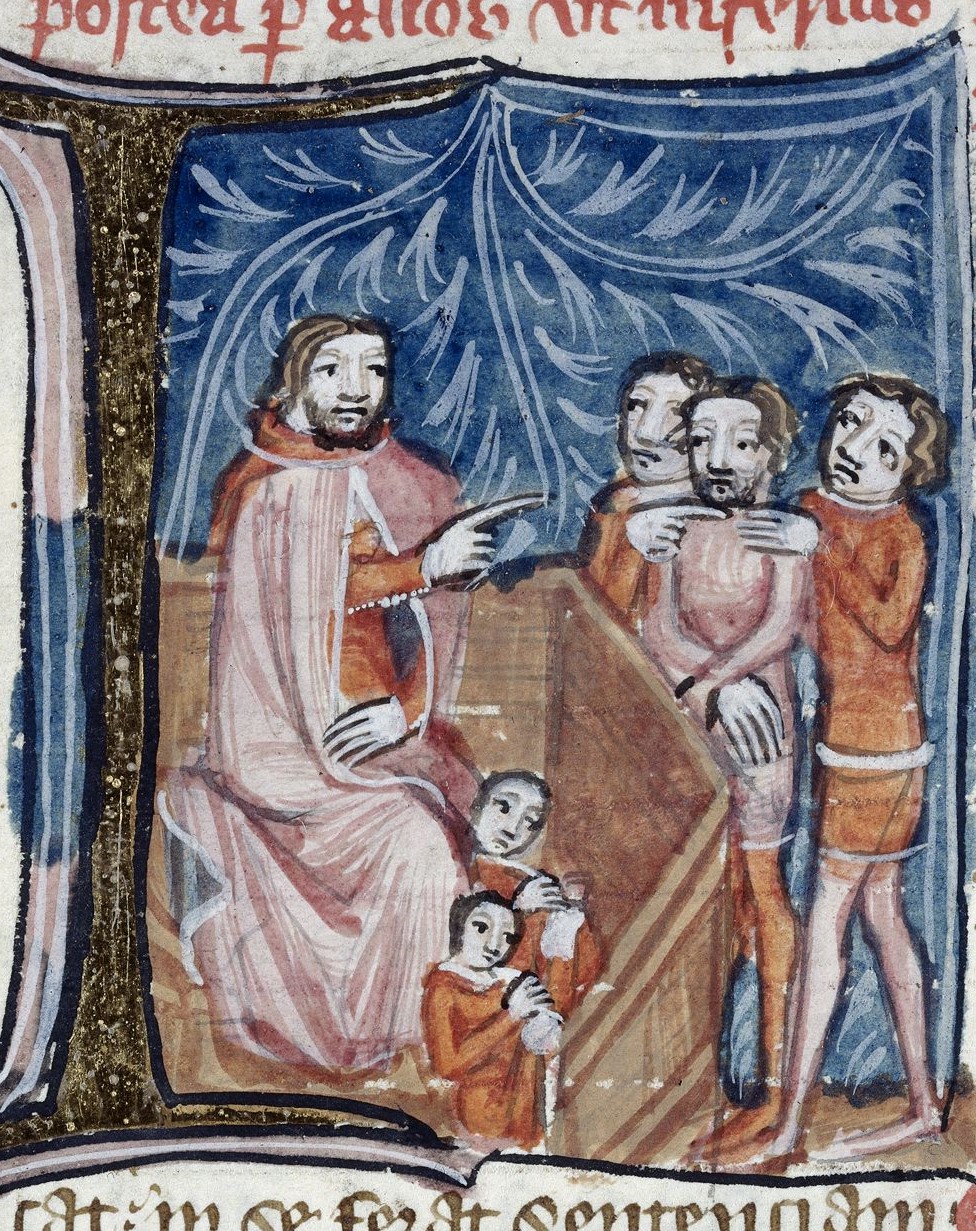
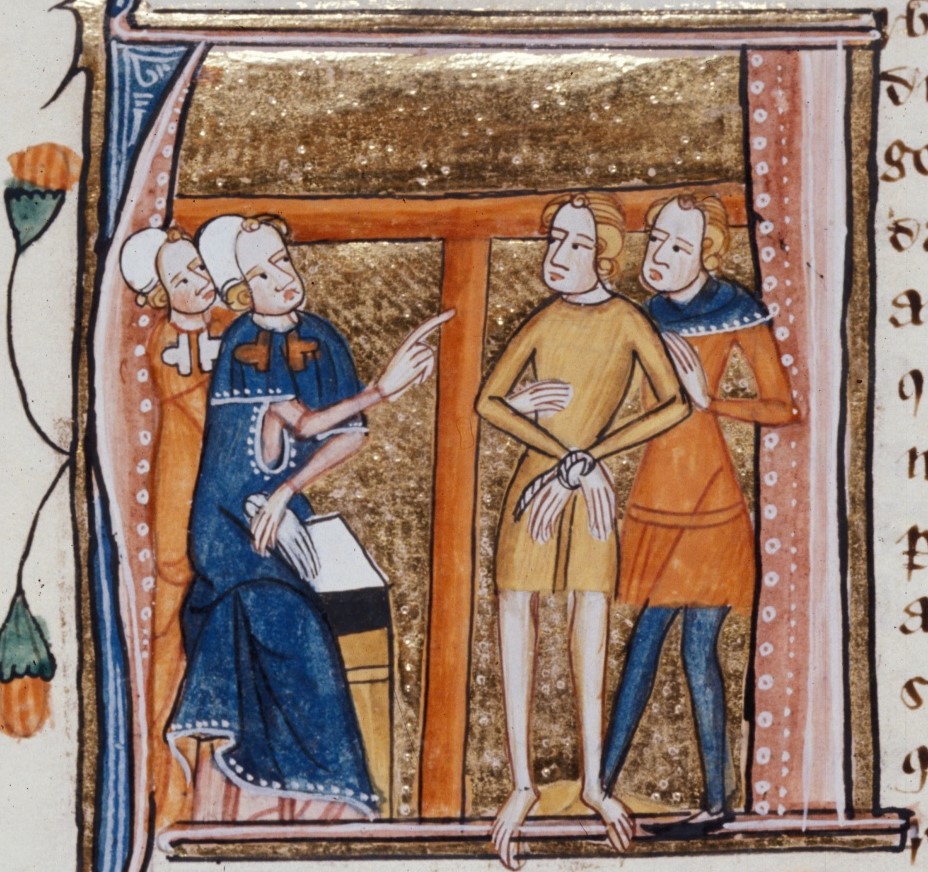
Let’s kick off with the saint who names the day. Saint Valentine himself. As with many saints, the origins of who he was (and there is evidence there may have been three saints) are vague. But don’t expect him to have been elevated to sainthood because of any kind of special involvement with lovers. Valentine was a holy priest in third century who helped out persecuted early Christians. He was arrested and tried before the prefect of Rome. The prefect tried to make him renounce his faith but Valentine refused. The prefect ordered Valentine be beaten with clubs, which still didn’t make him change his mind. He was then beheaded. His execution took place on February 14, about the year 270. Interesting that the record is clear about the date being February 14, but a bit hazy about the year!
This can be explained when we fast forward to medieval times.  The concept of courtly love with aloof, desirable women was hugely popular during this period. Troubadours celebrated these women through song and poems. In the fourteenth century, Geoffrey Chaucer brought the popularity of courtly love to new heights with his poem The Parlement of Fowles. This poem first introduced the idea of Valentine’s Day being a day for lovers. The Cour Amoreuse was founded in the French Medieval Court, supposedly in honour of women. It first met on Valentine’s Day in 1400, ruled over by a ‘Prince of Love’ who was a professional poet. Noble ladies heard various love-poems and presented prizes to the winners. 
But what’s interesting is that in the canon of Catholic saints, Saint Valentine isn’t the saint of wistful lovers in the throes of a new romance. He is the patron saint for those who have already found their perfect partner. Being the patron for those seeking love actually belongs to the lesser known saint, Saint Raphael. Saint Raphael, according to legend, helped Tobias enter into marriage with Sarah, who had seen seven previous bridegrooms perish on the eve of their weddings. (That has to be a run of bad luck if there ever was one.) Saint Raphael is the patron saint for what is called happy encounters (how sweet!).
You could of course always try the Welsh Saint Dwynwen. She is the Welsh patron saint of love and friendship, who lived during the fifth Century and was one of the 24 daughters of King of Wales, Brychan Brycheiniog. (When I came across those statistics, I felt perhaps that Brychan should patron saint of something, but I wasn’t quite sure what). Dwynwen was devout and very beautiful, and was broken hearted when her father refused to let her marry the man she loved. When praying for help, she was visited by an angel and God granted her three wishes, one of which was that the hopes and dreams of lovers would be met. Dwynwen founded a convent on Llanddwyn, on the west coast of Anglesey, where she was joined by other broken-hearted women. After her death in 465AD, a well named after her became a place of pilgrimage and it remains there today.
There is also of course related saints: Saint Agnes, patron saint of virginity. Saint Anne, the patron saint of fertility and childbirth and Saint Gerard Majella, patron saint of motherhood, both good to call on when Saint Agnes has gone off duty. And of course, good old Saint Fotino, the patron saint of erectile dysfunction, who has a reassuring big white beard.  
So, lovers of love, you are not restricted to just Valentine on February 14. You can take your pick of saints- just like the medievals did!
I am giving away prizes for this hop.  I have three copies of my medieval thriller The Fifth Knight on Amazon.com or here on Amazon.co.uk (paperback or e-book for UK, e-book for elsewhere)
Comment for your entry into the contest.  Extra entries can be earned for new blog follows, twitter follow, pinterest follow, facebook page likes and a double entry for e-newsletter subscriptions. All extra entry activities can be accessed from the buttons on my website. I have comments set to moderation, so if your comment doesn’t appear right away, don’t worry, it will soon.
Be sure and visit the other blogs!
  1. Random Bits of Fascination (Maria Grace)
  2. Pillings Writing Corner (David Pilling)
  3. Sally Smith O’Rourke
  4. Darcyholic Diversions (Barbara Tiller Cole)
  5. Faith, Hope and Cherry Tea
  6. Rosanne Lortz
  7. Sharon Lathan
  8. Debra Brown
  9. Heyerwood   (Lauren Gilbert)
  10. Regina Jeffers
  11. Ginger Myrick
  12. Anna Belfrage
  13. Fall in love with history (Grace Elliot)
  14. Nancy Bilyeau
  15. Wendy Dunn
  16. E.M. Powell
  17. Georgie Lee
  18. The Riddle of Writing (Deborah Swift)
  19. Outtakes from a Historical Novelist (Kim Rendfeld)
  20. The heart of romance (Sherry Gloag)
  21. A day in the life of patootie (Lori Crane)
  22. Karen Aminadra
  23. Dunhaven Place (Heidi Ashworth)
  24. Stephanie Renee dos Santos